harvest notes. week 1.
This is a little series I’ve been wanting to do for a while now. Harvest brings with it so many decisions. I’ve always found it interesting how different people move through them. This is how I go about it… doesn’t mean its the right way. Actually there’s probably a ton of mistakes. All the more reason it put it out into the world.
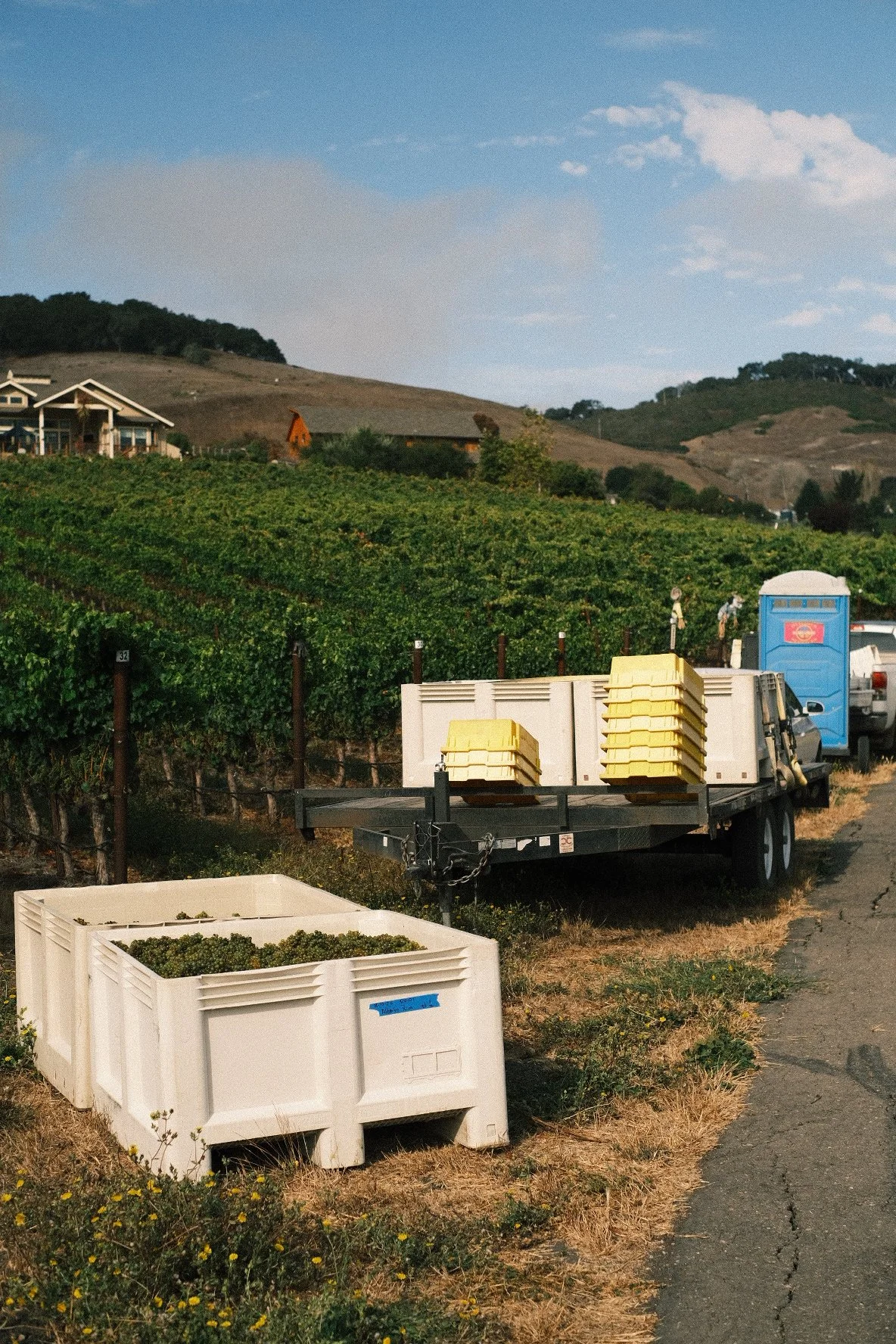
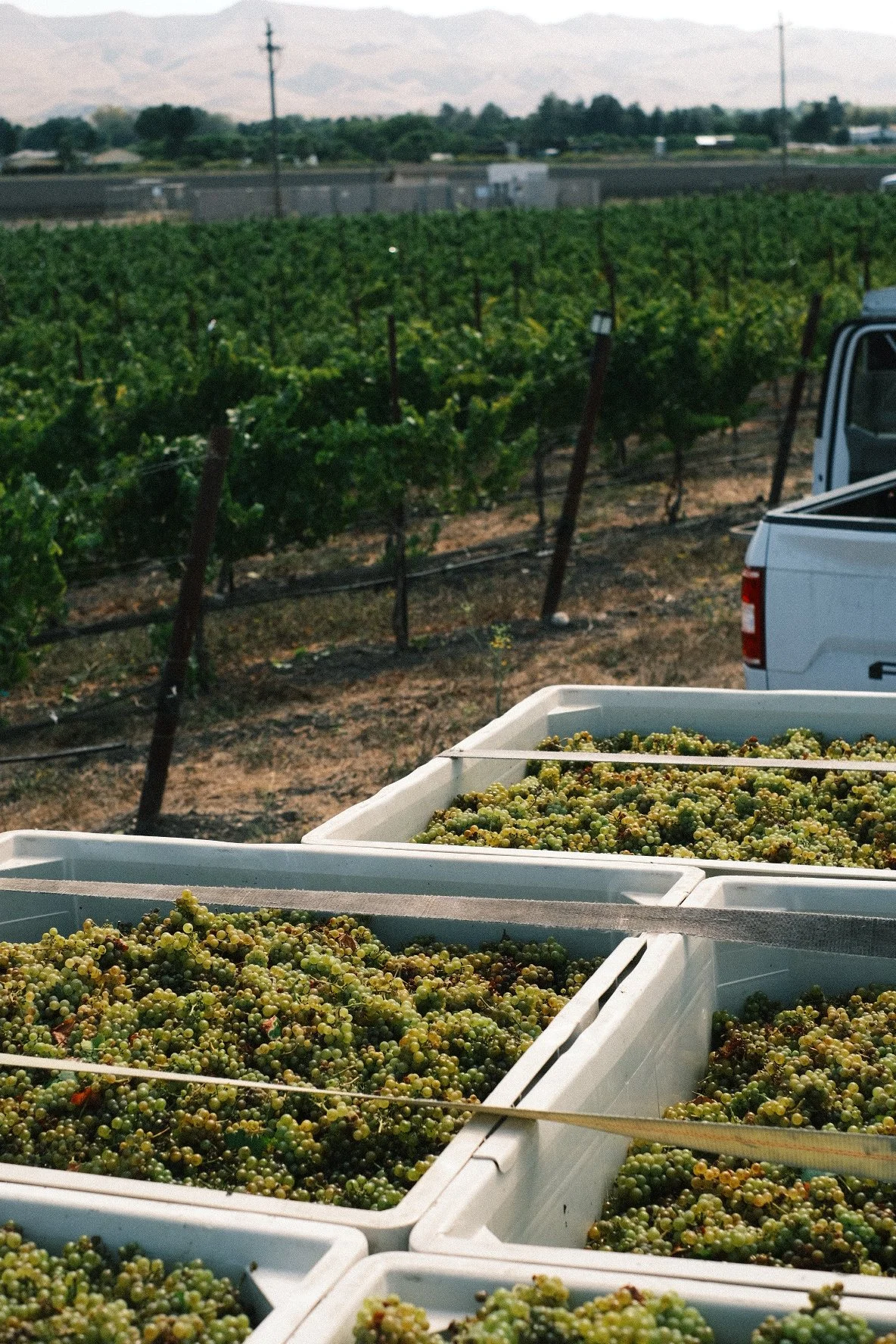
We officially picked our first fruit on Monday - Chardonnay from Reeves Vineyard (the one I am farming in Edna Valley). Full disclosure, this fruit came in pretty banged up. Lot’s of mildew (more on this later). Acid and sugar were right where we wanted them. Most importantly, the density of the juice was great. At such low sugar levels, sometimes this is hard to get. Here’s where I think it’s coming from.
reeves pick
Though it’s great sourcing fruit and building our wines through blending, I am becoming more and more convinced that the “vigneron” method is the unlock to make truly great wines. Instead of looking at farming and winemaking as separate, vigneron look at it as one system. Any intervention can happen in the vineyard rather than the winery. This fundamentally changes the foundation of the wine - making it more solid - and therefore allowing for a better structure to be built. Here’s an example:
We have always picked early for acidity, but occasionally the finished wine can be a bit thin - que blending to get texture etc. I think a lot of the weight of the finished wine has to do with water uptake and vigor in a vineyard, especially for the final days leading up to the harvest. If a heat spike comes in and we put water down, the juice may have the same chemistry as the sample, but has way less weight. Just a note, lots of water goes down in most vineyards during heat spikes in order to keep the plants happy nad fruit ripening. We don’t need super ripe fruit so it’s not as important. As the grower, I know when I’m picking, and can limit the irrigation to get a lot of concentration in the juice at these lower sugar levels etc.
Reeves’ Chardonnay
1.99 Tons
20.2 brix
3.18 pH
8.5 TA
The grapes were picked and direct pressed. I would have loved to crush and soak over night and then press (you know me) but with the state of the skins, probably not the best idea. The juice went to a tank, which was hyper chilled for 2 days, resulting in a pretty heavy settling of lees and a slight increase in pH. The thinking?
Cold stabilizing wine results in H+ to bind to K+, precipitating out of solution as tartrates, and increasing pH. Good thing we picked so early.
Okay, lees, very important. And, probably even more importantly is the settling of that lees and the full oxidation of juice. As the juice was pressing there was a significant amount of grey in the brown juice. It looked like mildew. And smelled like mildew. (circling back to the intro) I think most people would freak out (I kinda did). However a consistent image kept popping into my head: pulling up to the beach and the smell you get from all of the dried seaweed on the sand. Salty. Sort of green. Kind of nori. And it’s sort of pleasant, like a deep earthiness. Sure, this can be fixed. But let’s just see what happens as this green smell oxidizes and evolves.
barreling down chardonnay
It also got me thinking about the greenness you can get in grapes like cabernet or wholecluster wines. Yes, probably a different chemical, but from a sensory standpoint, kind of similar. To me, this green moves the background with oxygen exposure. Less is protective to oxygen, so settling is also important in order to get this nori smell to move to the background.
Its also this magical thing that acts as a natural fining agent. Positively charged molecules bind to negatively charged ones, get heavy and drop out of solution. Any “imperfections” should bind up.
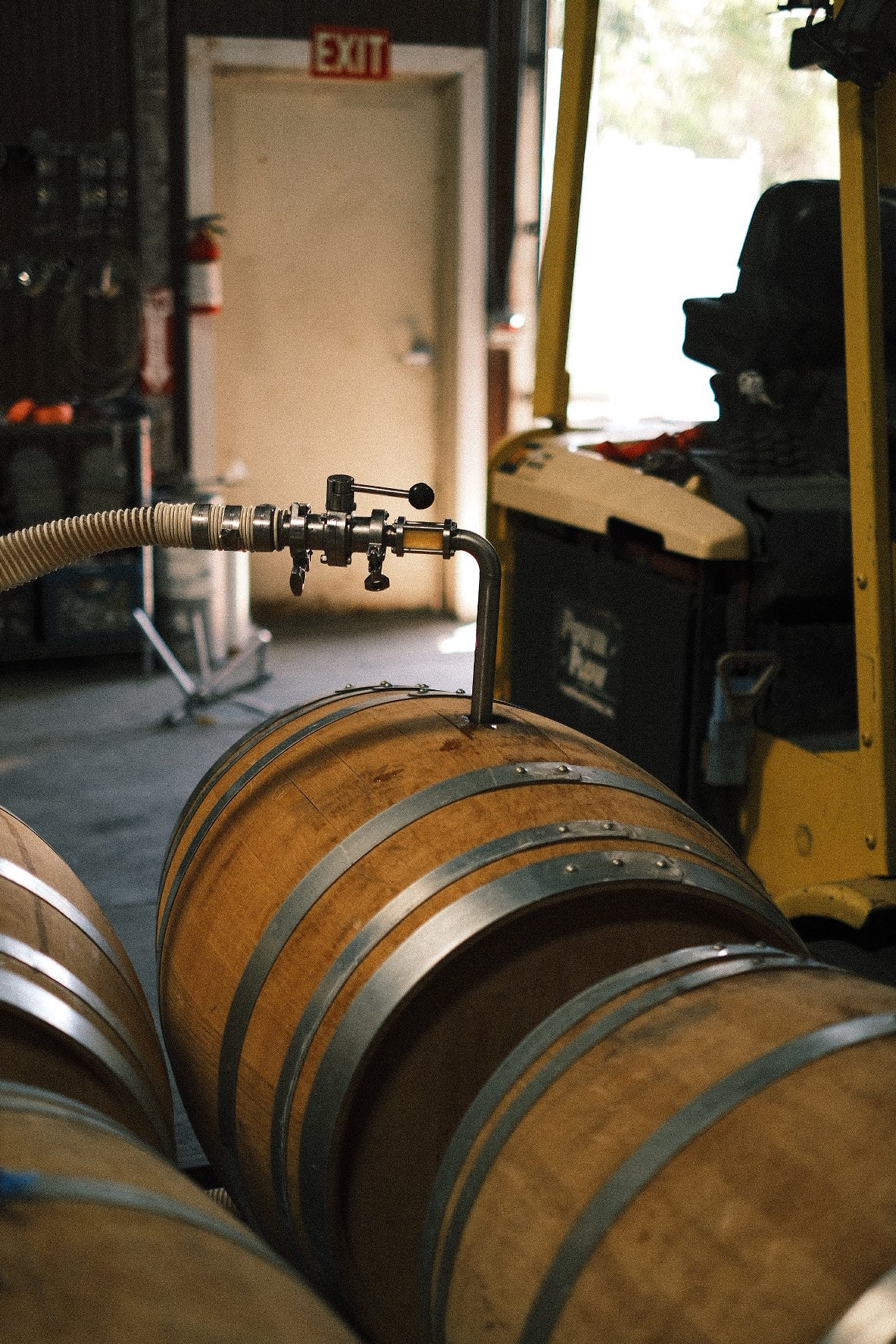
Fast forward to Wednesday and this is exactly what happened. Juice on the top of the tank was the classic orange brown, with that grey on the bottom. I barreled down to 6 barrels at fermentation height, and low and behold, the heavy nori seaweed smell was found in the lees at the bottom of the tanks. It was really strong when washing out. And the juice in the barrel? Clean. Fresh. Slight ocean saltiness. Perfect. All of this using “natural” techniques without additives.

Shell Creek Chenin Blanc
1.9 Tons
19.8 brix
3.55 pH
6 TA
The same day we picked Chenin Blanc from Shell Creek. This is always a fickle pick. Lot’s of potassium in the juice - and lots of water in the vineyard. Que a thinner wine with higher pH (low acidity). This is one that requires a little skin contact. We are able to get better texture in the wines this way which is very important. ~4 hours. Then pressed. The key here is to press very lightly. In the past, I have only taken this to about 0.6 bar, anything more and the acid drops out. We will settle in tank for a few days before we barrel down, but not necessarily chill it. Again, the potassium will bind and drop your acid. This year, VERY green on smell. Maybe not the best year for chenin, but that’s okay. It’s all getting blended anyways.
Friday, no green. Has that fresh pumpkin thing I love. Went to 6 barrels at fermentation height. Shell is an anomaly in my opinion. These numbers should not work, and yet somehow the finished wine is just as it should be. Definitely a wine I have become more comfortable in making as the years have gone on.
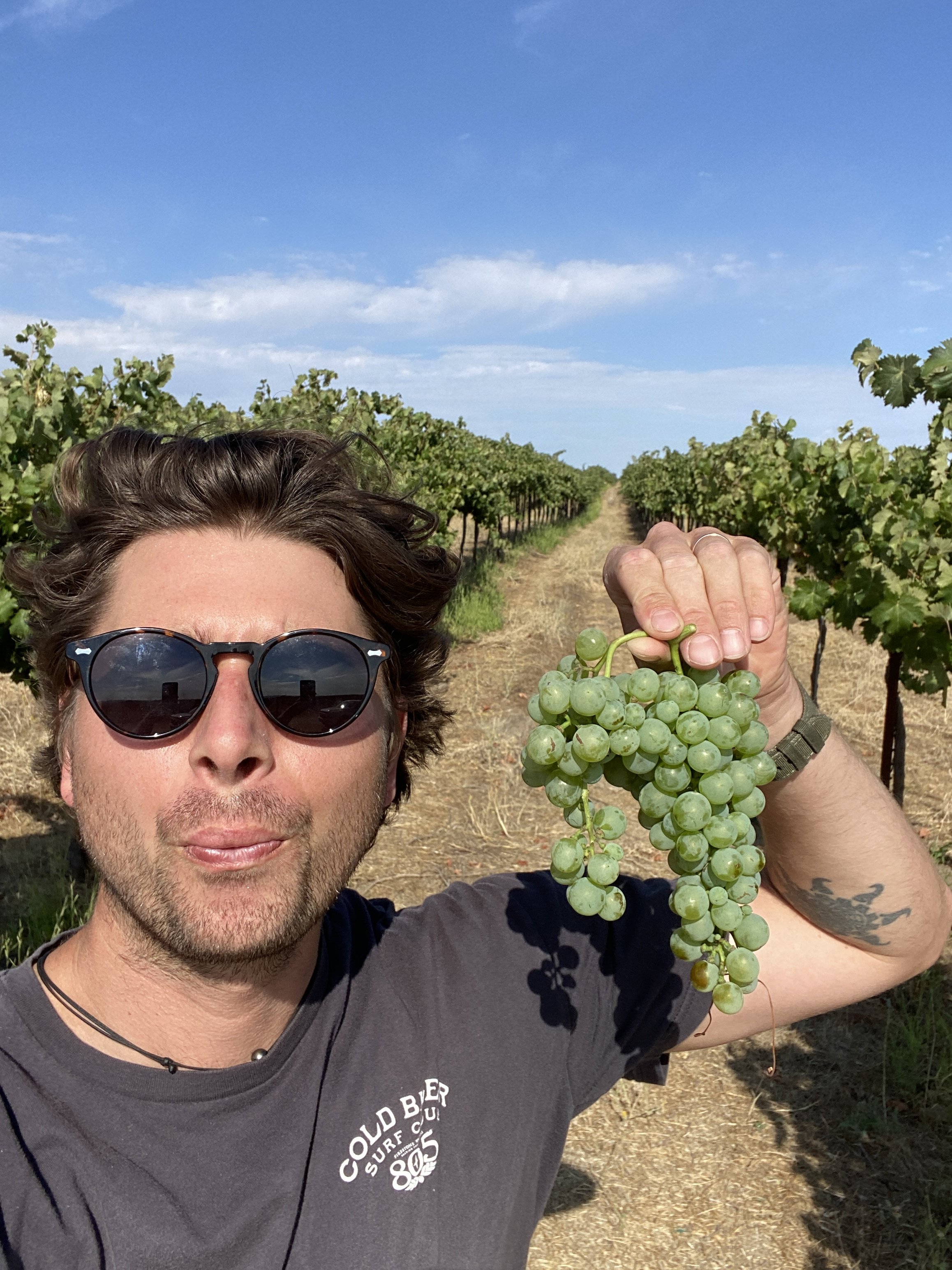
I visited Duas Terras for Grenache Blanc, Vermentino, Carignan, and Assyrtiko. The latter 2 are pretty far out. GB is ready, likely next week. Verm is lagging behind that. Weird. Opposite to last year where we picked verm first and then GB 3 weeks later. I am noticing quite a bit more gelatinous pulp than juice in the berries this year. Lower sugars and higher pH’s as well…
Also went to Ambyth. We got grenache from them last year and really liked it. This year is the same, plus some syrah that should play well to give us some more color and texture (bind up those tannins). Syrah will likely be picked next week. They don’t water much, and again, at lower sugars, the berries are fully phenolically ripe. That being said, the vines also look like they are kind of done. Lot’s of yellowing of the leaves (this is starting to happen in Reeves Syrah as well).
When I look around, not just the leaves on vines, but leave on trees are starting to turn. This seems super early to be experiencing the shift to fall. The temperatures are staying up, but the growing season is definitely coming to an end and coming quickly.
In between all of this: had our first private tasting event at Reeves’ barn. Was incredible. Will probably write more about it later.
Wednesday I was also invited to a roundtable discussion on Cinsault. Dave Carpenter from Ciento was kind enough to give us all some Cinsault to play with last year (Anthony and Varinder were also included). The conversation started with how all of us fermented the wine differently. We tasted. We compared. And of course it divulged into more conversation about harvest and winemaking in general. My key take away: wow, I’m so blessed to have worked at Denner with so many different varietals. They were rattling off a lot of questions to Anthony about things like Counoise and Graciano - and everything he said I knew. That’s cool.
Ok, headed to SD for an event today. Surfing tomorrow down there. Then gotta jam back up here. Big week next week.